From the Book March 2, 2026
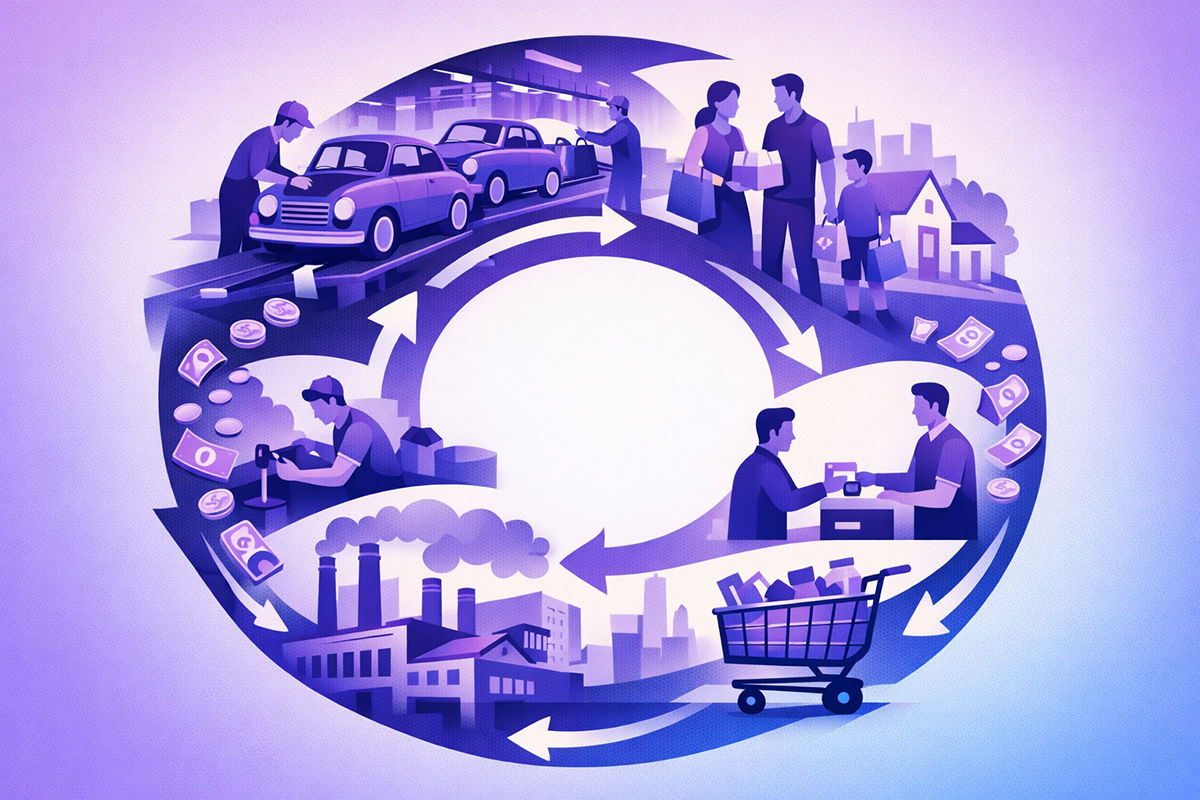

Everyone has an opinion about AI's impact on work. Tech optimists say it will create more jobs than it destroys. Doomers say we are all replaceable. Both camps are arguing about the wrong thing.
The real question is older than AI. Older than the internet. Older than the computer itself.
Who's going to buy the cars?
The Lesson Henry Ford Learned the Hard Way
In 1914, Henry Ford more than doubled his workers' wages to five dollars a day. The primary reason was practical — his assembly line was hemorrhaging workers and constant retraining was crippling efficiency. But Ford understood something structural beyond the immediate crisis. His workforce and his customer base were the same people. You could not separate them.
"You cannot automate your customers."
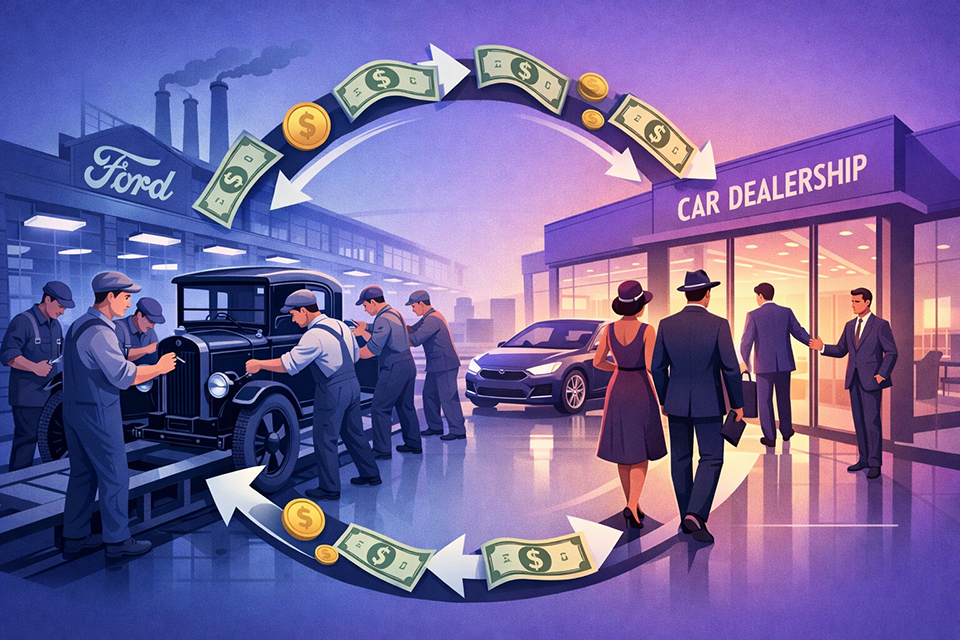
Today every company racing to cut white collar headcount through AI is running the same math problem and getting it spectacularly wrong. The efficiency gains are real. The demand destruction that follows is also real.
We Have Seen This Before. Sort Of.
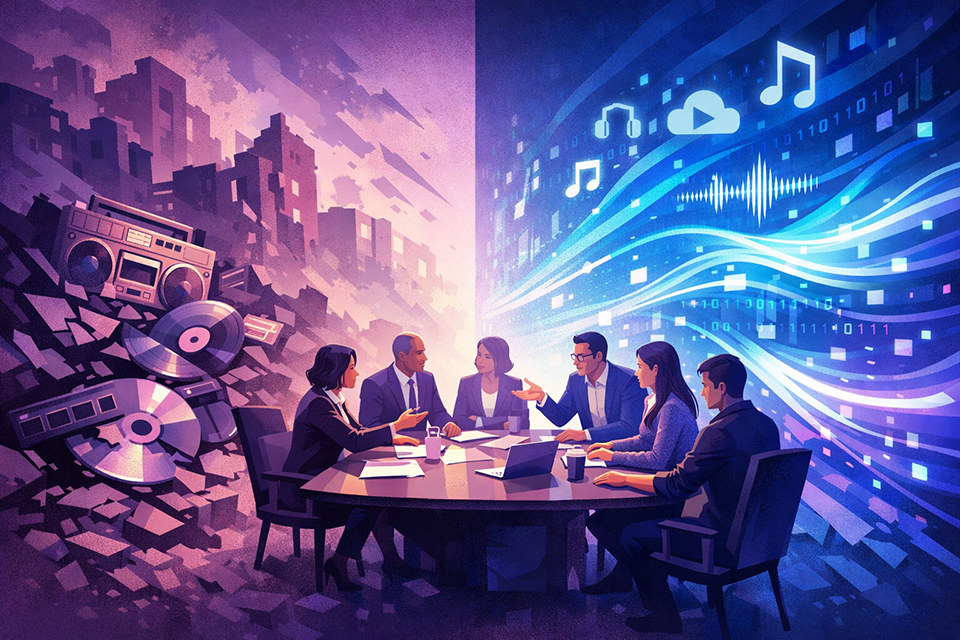
Napster worked. Tens of millions used it. When the labels finally forced a negotiation, Napster offered one billion dollars over five years for a legitimate subscription service. The offer was rejected outright. The incumbents did not want compromise. They wanted control of what came next.
Here is the part that matters most. The negotiation did not save the old world. It determined the shape of the new one. The musicians lost most of their leverage anyway. The settlement was not "things stay the same." It was "things change on different terms."
That is the honest AI parallel. The doomers may be wrong about the mechanism. They may not be wrong about the destination.
This Time There May Be No Transition Path
Since the Industrial Revolution, every technological disruption followed a recognizable pattern. The gas lamplighter lost his job when electricity came — but he could go work for the electrical company. The machine displaced his task. His capacity to learn and contribute remained intact. A transition path existed because human cognition was the one thing the machine could not replicate.
That assumption is no longer safe.
Every prior disruption displaced a task. AI replaces the cognitive capacity that performed it. That is not a larger version of what came before. It is a different category of event. And the frameworks we inherited from prior transitions were built on an assumption that may no longer hold.

What This Means Right Now
This transition is happening to real people. Fathers and mothers who built careers over decades. Young adults who just graduated into a market that looks nothing like the one they prepared for. Veterans of their craft quietly asking, through back channels, whether there is still a place for them.
The window to build at the intersection of deep expertise and genuine AI collaboration is real. It is meaningful. And it is shorter than almost anyone is acting like it is.
The timeline is negotiated. That is not an invitation to relax. It is an instruction to move — and while you are moving, to ask the harder questions out loud.
The full argument — the speed gap, the Margin Call scenario, the displacement versus replacement distinction, and what practitioners can actually do about it — is in the book.
Use every day of that negotiated time as if it is shorter than you hope. Because history says it probably is.
Ready to build at the intersection of expertise and AI?
The Architect and The Navigator is available now.
The framework for genuine AI collaboration — not replacement, not resistance, but partnership.
Jae S. Jung has been building since 1997 — infrastructure, SaaS platforms, legacy migrations, distributed teams across four continents. Not drawing diagrams and handing them off. Actually building. That's the philosophy behind WAM DevTech. AI doesn't replace nearly 30 years of that. It amplifies it.
Share Article


