From the Book February 23, 2026
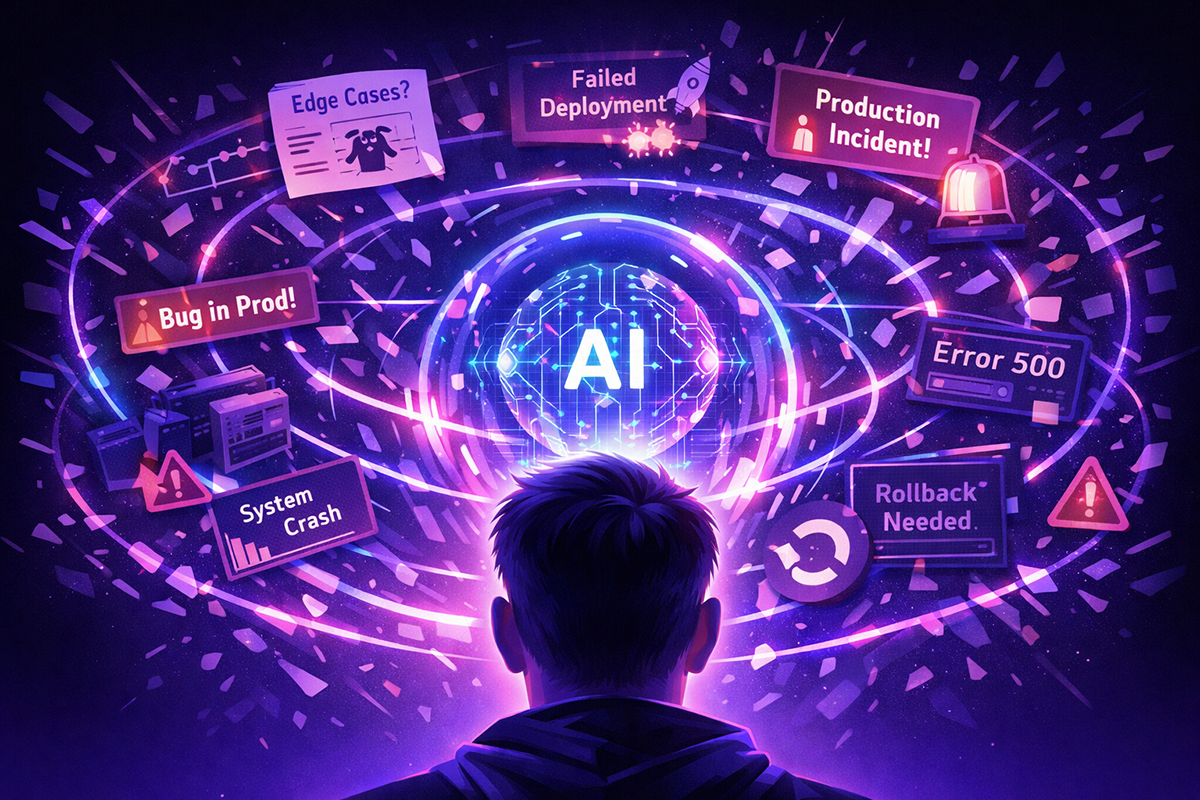

Every developer I know who's been in the industry for over a decade uses AI. They're not ignoring it. They're generating functions, writing tests, scaffolding projects, asking it to explain unfamiliar codebases. They use it daily. Some of them use it heavily.
But they won't let it do the real work. And I think there are two reasons why.
The first group is afraid. They've spent decades building expertise and they see AI as a threat to everything they've earned. So they use it just enough to stay current, but they hover over every output waiting for the mistake. When AI hallucinates or misses a business rule or generates code that doesn't quite fit, they pounce. "See? Not ready for prime time." The mistake confirms what they wanted to believe — that their craft is irreplaceable, that the machine can't do what they do.
The second group is different. They're not afraid. They're overwhelmed.
I was in the second group.
I wanted to use AI on real work. Not snippets. Not boilerplate. I wanted to hand it a full project and let it do the work. Build an entire application from the ground up. Migrate a legacy system. Deliver a production-ready proposal. But the thought of having to instruct AI through all of that was overwhelming. When you have 30 years of experience, you know exactly how much work those things involve. You know every place it can break. You know the gap between a demo and a deployed system. So when someone says "AI can build your whole application," you don't think "great." You think "you have no idea how many things can go wrong between here and production." And the idea of having to spell all of that out felt like more work than just doing it yourself.
What I eventually figured out is that "instruct" was the wrong word entirely. But it took months to get there.
The Identity Problem
When you've spent decades mastering a craft, there's identity tied to the act of doing it. A senior developer doesn't just know how to write code. Writing code is who they are. Their reputation was built on elegant solutions, clean architecture, code that other people admire. That's not a skill you hand off casually.
Same for proposal writers, technical architects, system designers. The craft is the identity. The years of experience aren't just knowledge stored in your head. They're woven into the way you work. The rhythm of it. The satisfaction of building something from nothing with your own hands.
AI threatens that identity. Not because it replaces you. Because it changes what "doing the work" looks like. And that change feels like loss even when it's actually promotion.
The Power Saw Problem
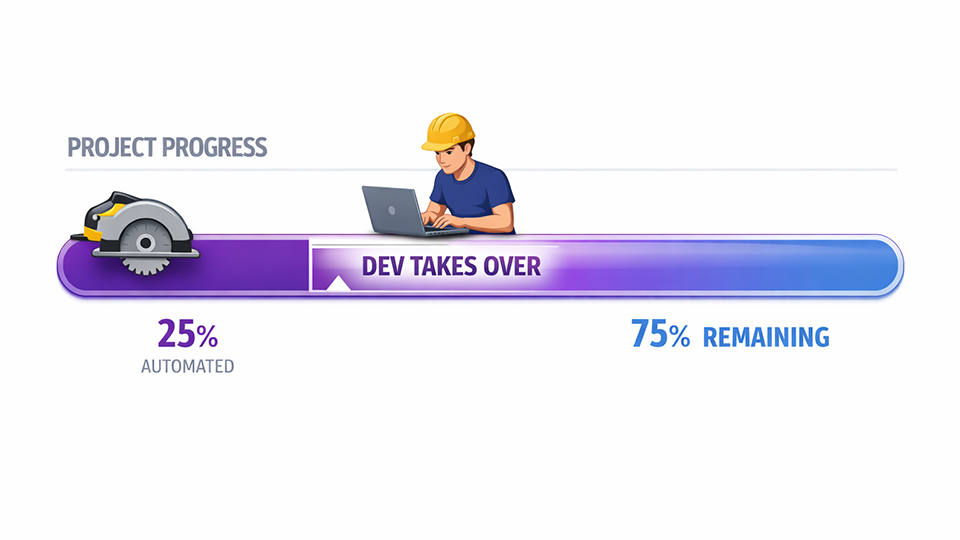
It's like owning a power saw, cutting a quarter of the way through, then setting it down and finishing with a hand saw. You have the tool that could do the whole job. You only trust it for the easy part.
Experienced developers let AI handle the mechanical parts — the boilerplate, the tests, the scaffolding. The parts they consider beneath their skill level. But the moment the work gets interesting — the architectural decisions, the complex logic, the parts that require real judgment — they take over manually. Because that's the good part. That's where the craft lives.
The problem is they're drawing the line in the wrong place.
The Speed Problem
When power tools replaced hand tools, people had time to adjust. The circular saw didn't arrive the same week as the table saw, the router, the planer, and the CNC machine. Each tool earned trust one project at a time. Craftspeople adapted gradually.
AI skipped the gradual part.
This isn't going from hand saw to power saw. This is going from the Wright Brothers taking flight to an F-16 flying at Mach 1. In one jump. No transition period. No time to build confidence at each altitude. One day you're writing code line by line, the next day someone shows you a full application generated in an afternoon and asks why you're still doing things the old way.
That speed gap is paralyzing. Not because experienced developers can't learn new tools. They've been learning new tools their entire careers. It's because the jump is so dramatic that there's no obvious first step. Where do you even begin when the tool claims it can do everything?
Ignorance Is Bliss
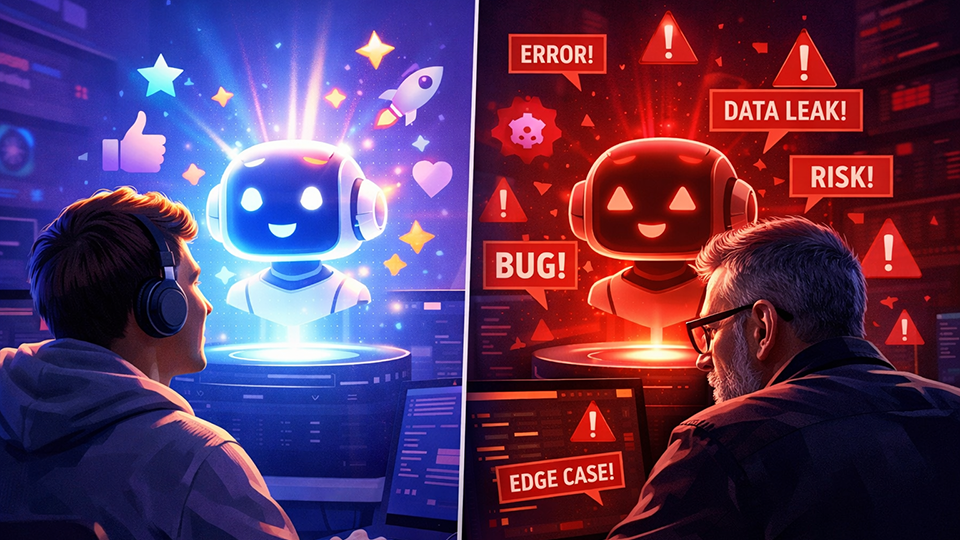
There's a reason younger programmers are more open to AI. Some of them don't just welcome it — they can't imagine working without it. And it's not because they're smarter or more adaptable. It's because they don't know what they don't know.
They haven't lived through the failed deployment that took down production at 2 AM. They haven't watched a project that was 90% done collapse because the last 10% turned out to be the hardest part. They haven't sat in the meeting where the client changed the requirements after the architecture was already locked.
When a junior developer sees AI generate a working function in 10 seconds, they think "this is incredible." When a veteran sees the same thing, they think "but will it handle the edge case where the session expires mid-transaction and the database is locked by a concurrent process that nobody documented?"
Ignorance is bliss. Knowledge is hesitation.
And here's the thing — that hesitation isn't irrational. The veterans are right that most AI demos wouldn't survive production. They're right that the gap between generated code and deployable code is enormous. They're right that AI doesn't understand their specific infrastructure, their specific edge cases, their specific history of what failed before.
What they're wrong about is the conclusion. The answer isn't to hold back from AI because it doesn't understand those things. The answer is to give AI those things. The scars, the constraints, the lessons learned — that's not a reason to distrust AI. That's the context AI needs to produce output that actually works.
"The junior developer doesn't have that context to give. The veteran does. That's the paradox."
What I Found on the Other Side
I eventually figured out how to cross the gap. It wasn't what I expected.
Over the past two months, I used AI as a full collaborator on five production projects. Not demos. Not tutorials. Real work — applications built, systems migrated, proposals delivered. The output would have taken months with a traditional approach. It took weeks.
But the work wasn't easier. It was different. My expertise didn't become irrelevant. It became the most important input in the entire process. Every decision, every constraint, every scar from a past failure — all of it mattered more, not less.
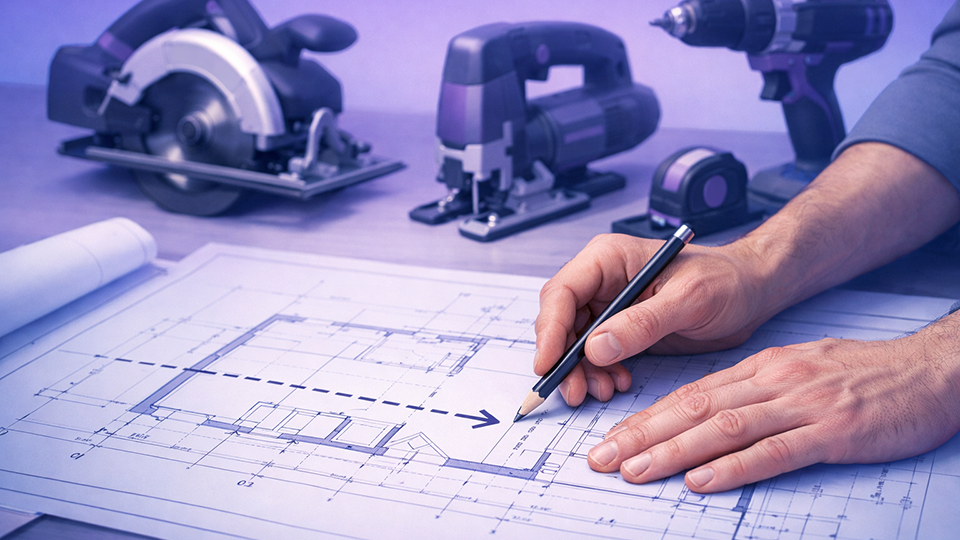
The hand saw feels familiar. The hand saw feels like mastery. But the power saw doesn't diminish your skill. It reveals what your skill was always meant for: not the cutting, but knowing where to cut.
I'm writing a book about exactly how I did it — the framework, the principles, and the five case studies that shaped them. If you're in either group — the one waiting to pounce or the one that wants to start but doesn't know how — that's who I wrote it for.
The Architect and The Navigator: Building with AI is available now on Leanpub.
Ready to cross the gap?
The Architect and The Navigator is available now.
The framework for genuine AI collaboration — built from real projects, not theory.
Jae S. Jung has been building since 1997 — infrastructure, SaaS platforms, legacy migrations, distributed teams across four continents. Not drawing diagrams and handing them off. Actually building. That's the philosophy behind WAM DevTech. AI doesn't replace nearly 30 years of that. It amplifies it.
Share Article


